Remote learning exploded after 2020. Consequently, cheating opportunities multiplied. Universities now fight to protect academic honesty while still offering flexible assessments. A reliable proctor for test sessions gives administrators confidence that results reflect real learning. Moreover, regulators and employers demand credible grades. This article explains why proctoring remains essential, how institutions address privacy worries, and which best practices keep students supported.
Mounting Online Cheating Pressures
Cheating data tells a stark story. The Journal of Academic Ethics reported 54.7% of surveyed students admitted online cheating during the pandemic. Furthermore, a 2024 Wiley survey found 96% of instructors suspect some dishonesty. AI tools now write essays, solve math, and even mimic code style. Therefore, detection alone no longer suffices; prevention must occur in real time.
- 54.7%: self-admitted online exam cheating (2023).
- 11%: assignments with 20%+ AI content, Turnitin 2024.
- $9.3 B: broad global proctoring market estimate for 2024.
Institutions see these numbers and act. They deploy a proctor for test sessions to make cheating riskier and grades credible. In summary, rising misuse of generative AI pushes campuses toward stronger oversight. Next, we explore credential value.
Protecting Credential Value Fairness
Employers trust transcripts when they believe the scores. Likewise, licensure boards require validated skills before granting practice rights. Consequently, any hint of widespread fraud erodes that trust. Proctored exams reassure external stakeholders that students truly earned marks.
Additionally, robust monitoring supports fairness among learners. Students who study honestly resent those who gain advantage through deception. A visible integrity layer reinforces community standards of academic honesty. In short, credential value rises when assessments remain secure. Let’s examine the specific proctoring role.
Proctor for test role
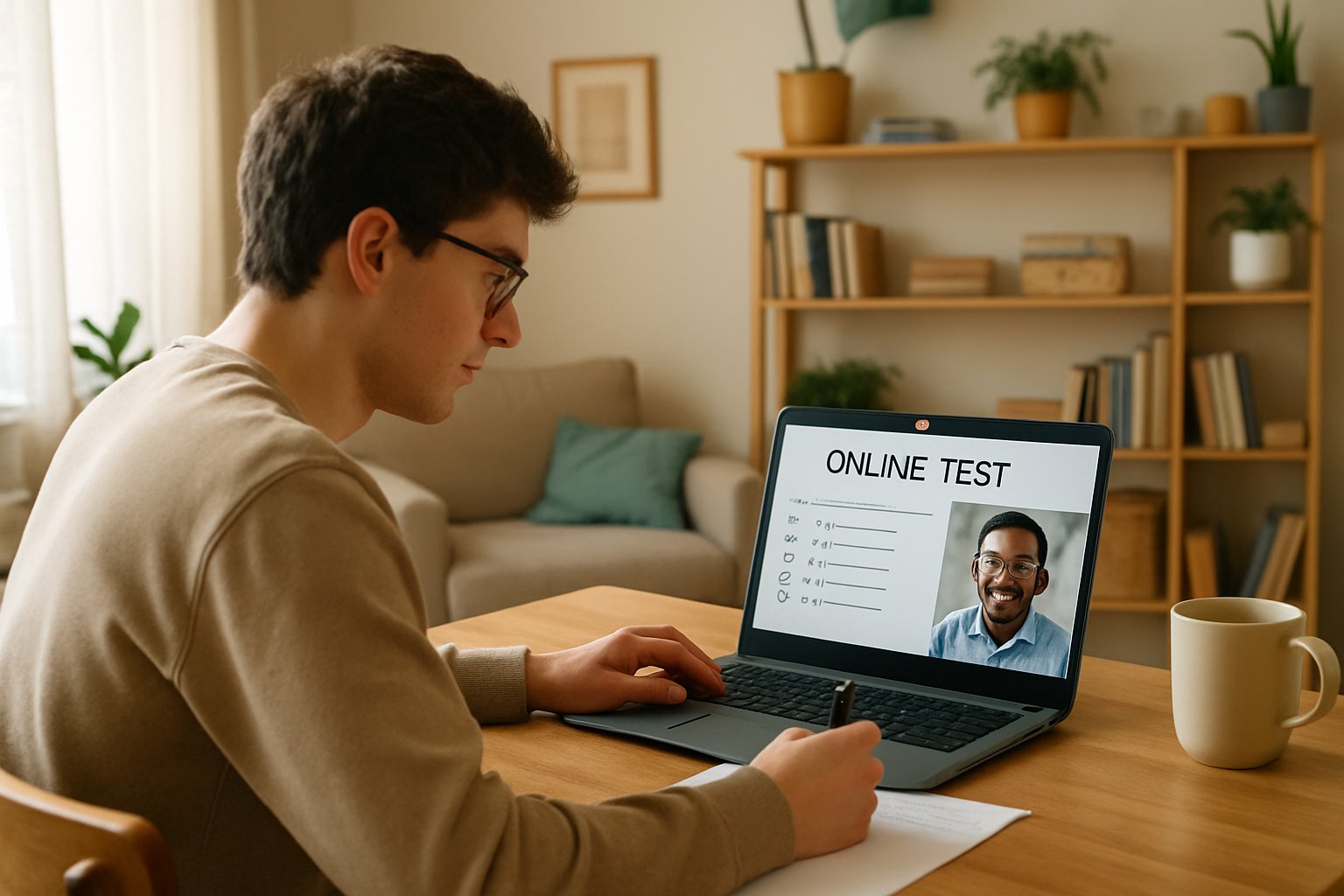
The modern proctor for test sessions combines human vigilance and AI analytics. Live proctors verify IDs, monitor behavior, and intervene instantly. Meanwhile, algorithms flag gaze aversion, extra faces, and screen switching. Institutions then review alerts before any penalty, which limits false accusations.
Moreover, recorded sessions create audit trails. Administrators can replay incidents, document due process, and train staff. This evidence supports consistent rulings, which strengthens perceptions of fairness and academic honesty. Ultimately, layered oversight deters impersonation and collusion. Up next, privacy considerations arise.
Balancing Privacy Equity Concerns
Webcams peer into bedrooms. Biometric checks capture sensitive data. Consequently, student groups challenge invasive methods. Advocacy organizations such as EFF and EPIC demand transparency, data minimization, and opt-outs.
Forward-thinking campuses now disclose policies clearly, encrypt recordings, and allow on-site alternatives. Furthermore, many platforms keep humans in the loop to reduce algorithmic bias. These steps calm anxiety while preserving integrity. Overall, privacy safeguards maintain trust and support academic honesty. The next section lists concrete institutional actions.
Institutional Best Practice Checklist
- Explain proctoring rules in syllabi before registration.
- Verify identity with multi-factor methods, not only face scans.
- Require human review of all AI flags.
- Offer accessible room, device, or schedule alternatives.
- Delete or anonymize recordings after defined retention windows.
Each item reduces complaints and legal risk. Importantly, administrators still maintain a visible proctor for test presence that deters misconduct. Consequently, best practices balance rigor and respect. Next, we consider market trends.
Market Outlook And Insights
Analysts disagree on size yet agree on growth. Some scopes forecast USD 12 B by 2033, while education-only studies show smaller figures but higher CAGRs. Regardless, demand stays strong as hybrid learning normalizes.
Additionally, vendors innovate with AI emotion detection, keystroke biometrics, and real-time language translation. Institutions that pilot early can shape ethical standards. Therefore, knowledge of vendor roadmaps helps buyers choose the right proctor for test suite. We now conclude with key takeaways.
Conclusion And Next Steps
Cheating pressures climb, credentials rely on trust, and privacy debates intensify. However, a well-implemented proctor for test program safeguards value, promotes academic honesty, and meets stakeholder expectations.
Why Proctor365? Proctor365 pairs AI-powered proctoring, advanced identity verification, and scalable monitoring trusted by global exam bodies. Consequently, institutions close integrity gaps without sacrificing user experience. Experience the difference and keep every proctor for test session secure. Visit Proctor365.ai today.
Frequently Asked Questions
- How does Proctor365 ensure exam integrity during remote assessments?
Proctor365 uses AI-powered proctoring combined with human oversight and advanced identity verification to detect and deter cheating, ensuring that every proctor for test session maintains high academic honesty standards. - What features are integrated into modern proctor for test sessions?
Modern proctor for test sessions utilize live monitoring, real-time AI analytics, biometric checks, and recorded sessions, all designed to prevent fraud while ensuring fair and credible assessments for both students and institutions. - How do proctoring solutions balance privacy with exam security?
Proctoring solutions balance security and privacy by using transparent policies, encryption methods, multi-factor identity checks, and human review of AI flags, which are essential for maintaining trust and academic honesty. - How does effective proctoring support credential value?
Effective proctoring safeguards credential value by ensuring exam results reflect genuine student effort, reducing fraud and impersonation, and providing documented evidence through audit trails that support reliable and trustworthy test outcomes.